In a world where reality sometimes feels a bit too mundane, augmented reality (AR) swoops in like a superhero, ready to spice things up. Imagine blending the digital realm with the physical one, making your morning coffee feel like a scene from a sci-fi movie. AR technologies are not just for gamers anymore; they’re transforming industries, from retail to education, and it’s time to take a closer look at this exciting frontier.
Overview Of AR Technologies
AR technologies integrate digital information into the physical world, allowing users to experience enhanced environments. This includes overlays of images, sounds, and other data on real-world settings. Various AR applications exist across multiple sectors, showcasing broadened adaptability beyond traditional gaming.
Retail leverages AR for virtual try-ons, enabling customers to visualize products before purchasing. In education, AR creates immersive learning experiences, where students can interact with complex models and simulations. Healthcare professionals utilize AR for surgical guidance, enabling detailed visualizations during procedures.
Several types of AR technologies exist, categorized into marker-based and markerless systems. Marker-based AR requires visual markers, such as QR codes, to trigger digital content. In contrast, markerless AR uses GPS and other sensors to determine the user’s orientation without specific markers.
Mobile devices support AR through apps that utilize built-in cameras and sensors. Head-mounted displays offer a hands-free experience, enhancing user interaction. Smart glasses represent another emerging trend, providing seamless access to information while users engage with their surroundings.
As AR technologies evolve, advancements in artificial intelligence and machine learning enhance capability and efficiency. These developments can lead to improved user experiences, customization, and functionality. Continued investment in AR research and development ensures ongoing innovation across industries, transforming everyday interactions.
Key Features Of AR Technologies
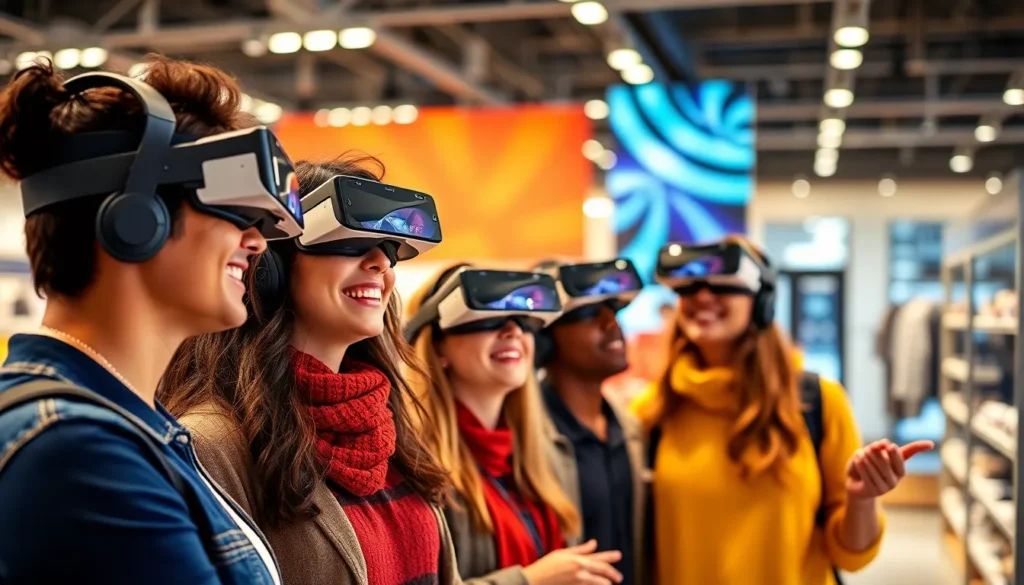
AR technologies facilitate unique interactions by blending digital elements into the real world. This combination creates engaging experiences across various applications.
Immersive Experiences
Immersive experiences captivate users by placing them directly into augmented environments. By employing realistic graphics and spatial sound, these experiences enhance emotional engagement. Retail applications allow customers to visualize products before purchase, while educational tools bring subjects to life. Businesses leveraging immersive AR report higher user satisfaction and retention. Interactive simulations, from training pilots to guiding surgeries, benefit from this detailed immersion. Increased realism transforms user interaction, making it more intuitive and memorable.
Real-Time Interaction
Real-time interaction remains a crucial aspect of AR technologies. Users receive immediate feedback from their environment, improving the overall experience. This feature enhances decision-making and encourages exploration. In retail, customers can try on clothes virtually and receive instant size recommendations. Educational platforms utilize real-time data to adjust lessons based on student performance. Additionally, AR tools aid in collaboration by allowing teams to interact with shared 3D models in real-time. Continuous updates to information keep users engaged and informed during their interactions.
Evaluating AR Technologies In Education
Evaluating AR technologies in education reveals significant impacts on learning. These technologies enhance student engagement and facilitate real-world applications of knowledge.
Benefits In Learning Outcomes
AR technologies improve learning outcomes through immersive experiences. Students grasp complex concepts more easily when engaging with interactive content. Studies show a 30% increase in information retention during AR-based lessons compared to traditional methods. Learners also benefit from personalized pacing, allowing them to revisit challenging topics. This tailored approach fosters deeper understanding and promotes critical thinking skills. Enhanced collaboration occurs when students share AR experiences, leading to discussions and teamwork. Overall, AR technologies create a dynamic learning environment that motivates students and encourages active participation.
Challenges In Implementation
Implementing AR technologies poses challenges for educational institutions. Costs associated with hardware and software may strain limited budgets. Additionally, teacher training programs must be established to ensure effective use of AR tools. Technical issues, such as software glitches or internet connectivity, can disrupt learning experiences. Ensuring equal access to technology also presents a hurdle, as disparities in student resources exist. Furthermore, curriculum integration requires careful planning to align AR applications with educational standards. Addressing these challenges is essential for maximizing the benefits of AR technologies in the classroom.
Evaluating AR Technologies In Retail
Augmented reality (AR) technologies play a pivotal role in transforming retail experiences. By integrating digital elements with physical spaces, AR enhances the way customers interact with products.
Enhancing Customer Experience
AR significantly elevates customer experience through immersive interactions. Customers can visualize products in real-time, which fosters greater emotional engagement. Virtual try-ons allow consumers to see how clothing or accessories look before purchasing, reducing uncertainty. Additionally, augmented displays provide detailed product information instantly, helping in informed decision-making. A study indicates that 65% of customers feel more confident about their purchases when using AR tools. This increase in confidence often leads to deeper satisfaction and loyalty.
Impact On Sales
AR positively influences sales by driving customer engagement and conversion rates. Statistics show that brands using AR see a 20% increase in sales on average. Customers often spend more time interacting with products that offer AR experiences, resulting in higher purchase intent. Enhanced product visualization reduces return rates, as customers are better informed about their selections. Integrating AR with online shopping experiences has proven effective, with 70% of consumers expressing interest in engaging with AR features. Retailers leveraging AR thus can significantly enhance their bottom line while building stronger customer relationships.
Evaluating AR Technologies In Healthcare
AR technologies significantly impact healthcare by enhancing training and improving patient care. With real-time data and interactive experiences, AR addresses various challenges in the medical field.
Applications In Medical Training
AR applications transform medical training practices. For instance, medical students can visualize complex anatomy through 3D overlays, facilitating better understanding. These immersive experiences allow trainees to practice surgical techniques in a safe environment, which reduces errors during actual procedures. A study showed that students using AR technology score 23% higher in practical assessments when compared to traditional learning methods. Engaging students through AR fosters critical thinking and teamwork, essential skills in healthcare.
Improving Patient Care
AR enhances patient care by streamlining processes and delivering critical information. For example, surgeons can overlay digital images onto a patient’s body during operations, improving precision. Patients benefit from AR tools that visualize treatment plans and expected outcomes, increasing their understanding of procedures. Statistics reveal that 74% of patients appreciate AR features that clarify medical information. Enhanced communication not only builds trust but also encourages patient participation in their healthcare journey. This technology’s integration leads to higher satisfaction and improved overall outcomes.
AR technologies are reshaping how individuals interact with the world around them. By blending digital elements with physical environments, they create immersive experiences that enhance engagement in various fields. The significant benefits seen in education, retail, and healthcare underscore the transformative potential of AR.
While challenges exist in implementation and accessibility, the ongoing advancements in AR promise to overcome these hurdles. As organizations continue to explore and adopt these technologies, the future holds exciting possibilities for deeper connections and enriched experiences. Embracing AR will not only improve engagement but also drive innovation across industries, making it an essential tool for the modern landscape.